Health from our pastures
Meat quality begins in living soil
At Biofarma Rašovice, organic livestock farming and regenerative grazing go hand in hand. Our animals eat grass, herbs and hay without grain supplementation.
Beef and lamb provide quality protein, iron, zinc and vitamin B12 as part of a varied, balanced diet. The animals’ diet also influences the composition of their meat.
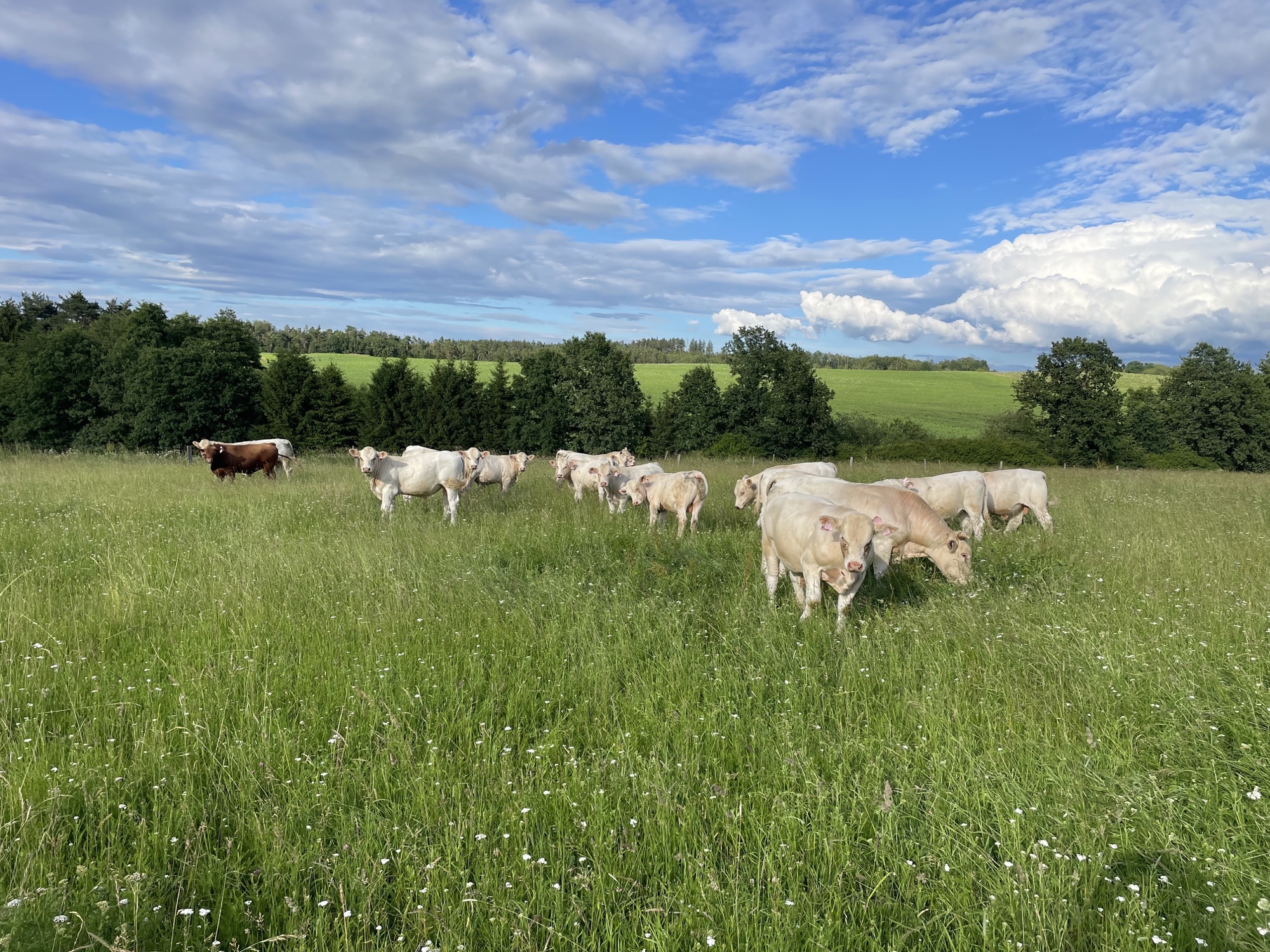
Omega-3 and natural grazing
Research comparing grass-fed and grain-fed beef generally finds more omega-3 fatty acids and a lower omega-6 to omega-3 ratio in grass-fed beef. The size of the difference varies with feeding, season and the animal.
These findings explain why we value a forage-based diet. They describe general research on beef, rather than laboratory results for our own meat. Beef can contribute to omega-3 intake within a varied diet.
See how we raise our animals →
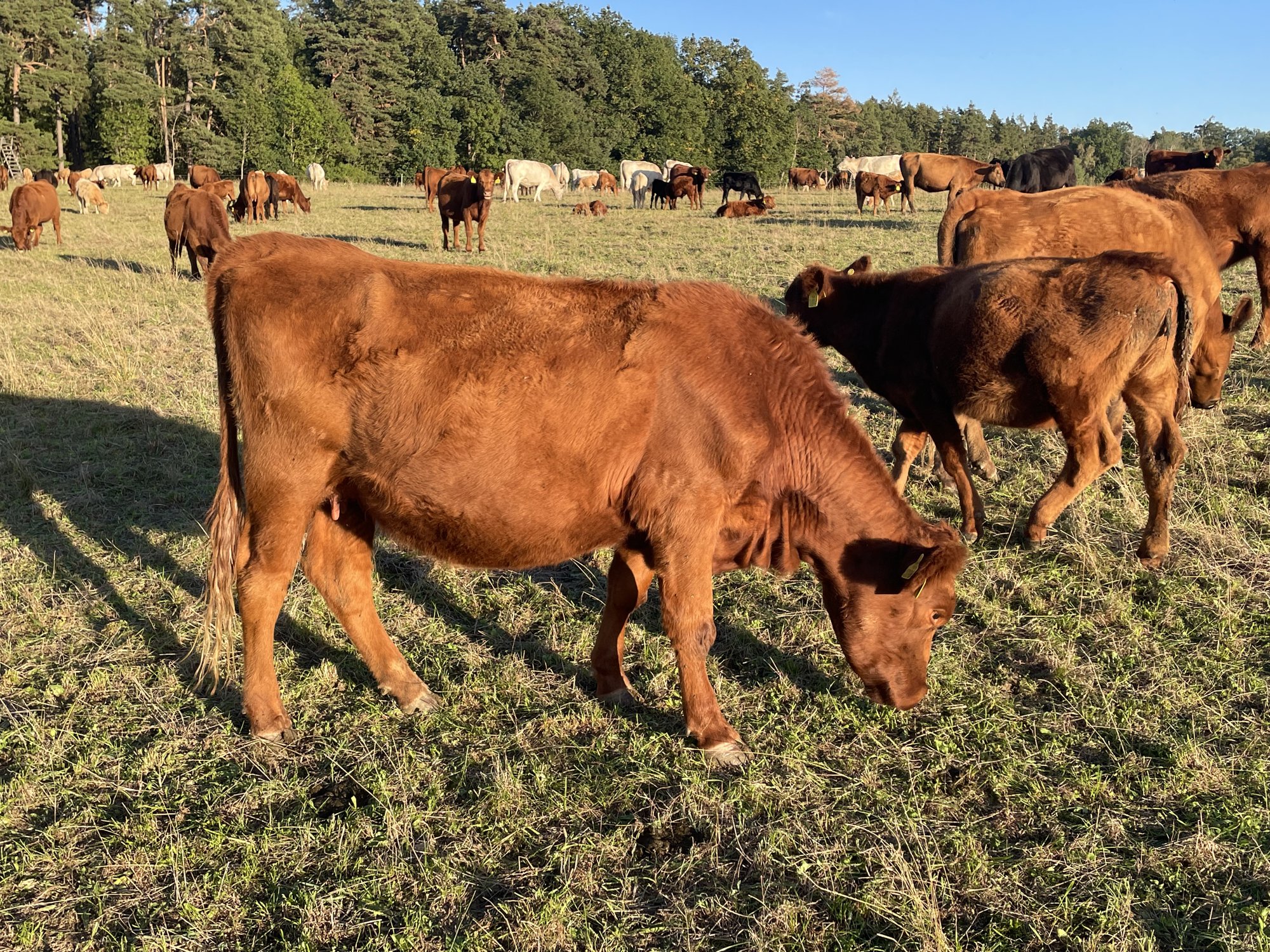
Protein and valuable micronutrients
Beef and lamb provide protein and nutrients including iron, zinc and vitamin B12. These nutrients have essential roles in the body: iron in oxygen transport, zinc in normal immune function, and vitamin B12 in normal nervous system function and red blood cell formation.
Studies of pasture-fed beef also report higher levels of vitamin E and beta-carotene than in grain-fed comparisons. Concentrations vary; the overall quality and balance of the diet remain important.
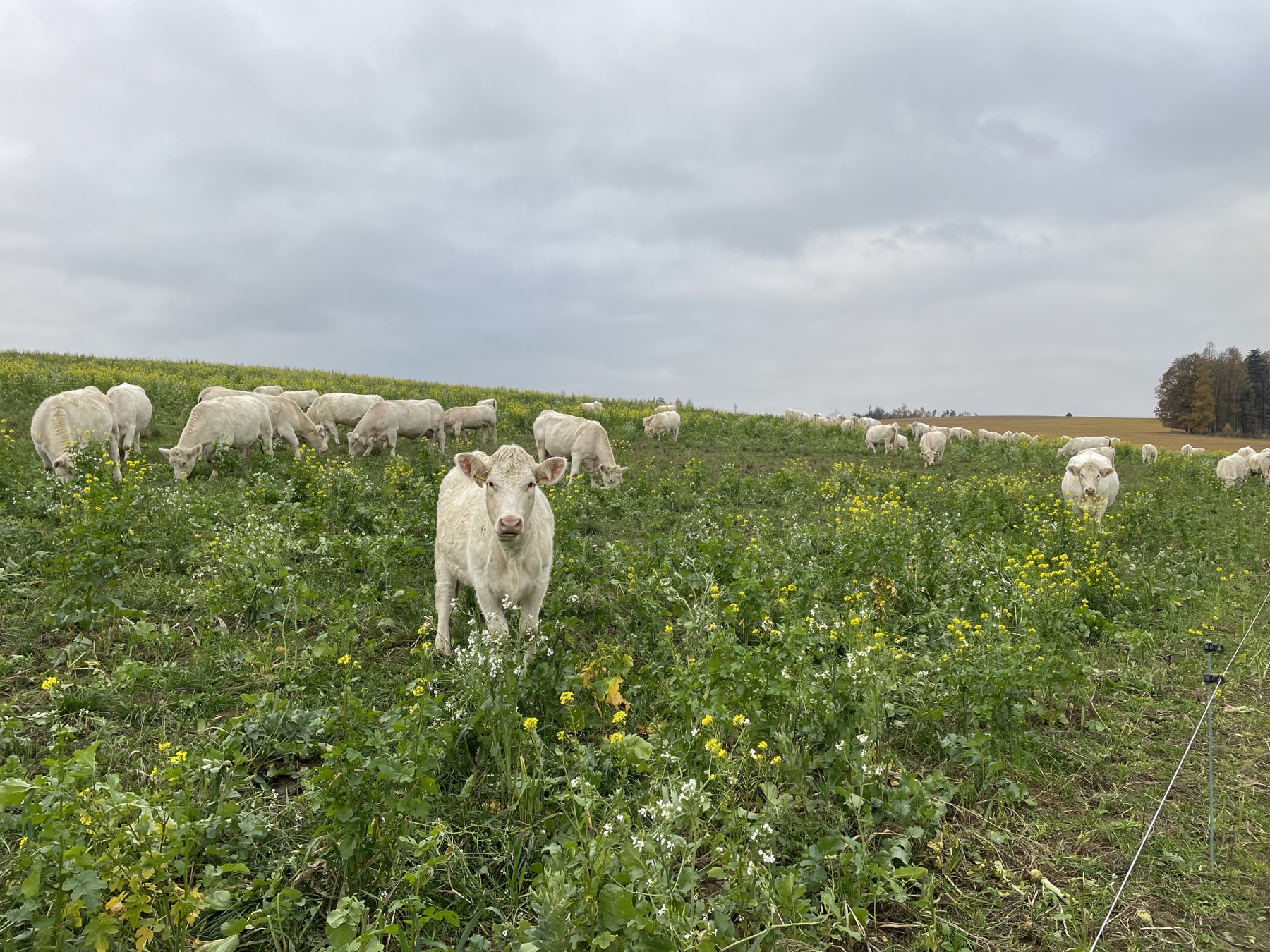
Diverse plants, diverse animal nutrition
Diverse pastures offer a mixture of grasses and herbs. These plants contain compounds such as carotenoids and phenolics, some of which or their metabolites can be found in meat.
This is an active area of research. Differences in meat composition do not by themselves demonstrate a particular health outcome in people. Our practical focus is diverse forage, healthy animals and time for pastures to recover.
