Breeding stock for international customers
Selected with pasture performance in mind
We sell only Aberdeen Angus breeding cattle, alongside breeding ewe lambs and rams. Our goal is to breed healthy, resilient animals that grow well and thrive within a regenerative grazing system.
Our livestock is raised on grass, herbs and hay without grain supplementation. The system in which we keep our animals is central to our breeding direction. Contact us to discuss current availability, individual animals and your breeding objectives.
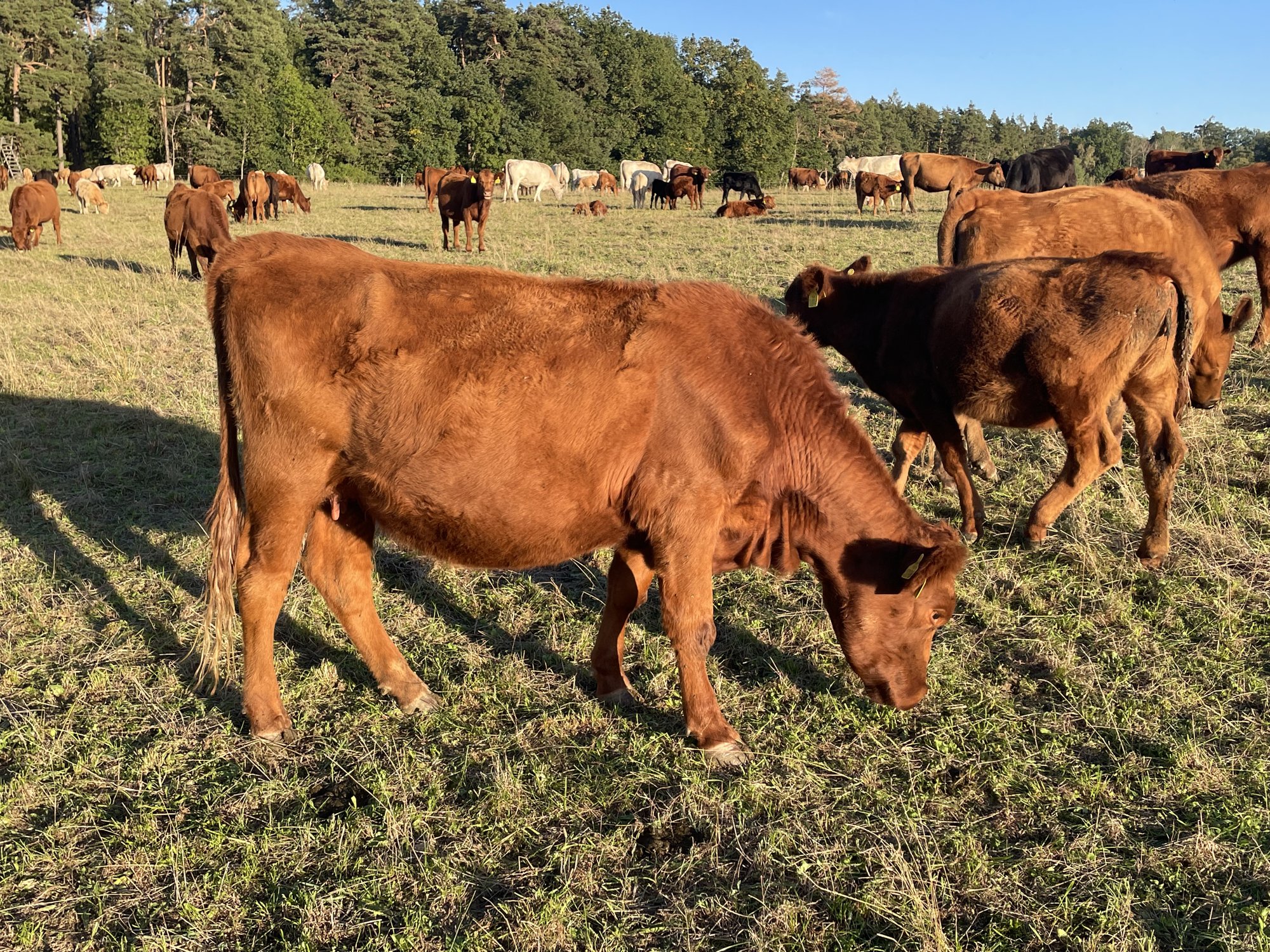
Aberdeen Angus — black and red
We keep Aberdeen Angus in both black and red varieties. This naturally polled breed of Scottish origin is valued for hardiness, maternal qualities and efficient use of grazing.
We offer breeding heifers and bulls. In our breeding programme, we seek animals that combine these useful characteristics with good growth and suitability for regenerative grazing.
Enquire about Angus →
FUNCTIONAL CATTLE FOR A GRASS-BASED SYSTEM
Our environment shapes our breeding goals
We sell only Aberdeen Angus breeding cattle, in both black and red varieties. We select for animals that can perform within our regenerative grazing system, including the demands of winter grazing.
Our focus is on the productivity and economics of the whole cow–calf system, with careful attention to pasture condition.
FRAME SIZE & PASTURE CARE
A smaller, moderate frame
We breed towards a smaller, moderate mature frame. Our aim is to reduce the pressure that large, heavy cattle can place on pastures during winter grazing. We combine this breeding direction with grazing decisions suited to soil and weather conditions.
FORAGE CAPACITY & WINTER GRAZING
Capacity to use stockpiled forage
We select for body depth and a large rumen capacity to support high forage intake. We want cattle that can make effective use of stockpiled forage — standing grass reserved for winter grazing — within our pasture-based system.
EARLY MATURITY & HERD ECONOMICS
First calving at two years
Early sexual maturity is an important selection priority. We aim for heifers to calve for the first time at around 24 months, reducing the period before they enter production and supporting the economics of the herd.
MATERNAL EFFICIENCY
A heavy calf relative to its dam
We aim for a high calf weaning weight in relation to the dam’s mature liveweight. This keeps the emphasis on efficient cows that rear a strong calf, rather than on increasing cow size alone.
GENETICS THAT SUPPORT OUR DIRECTION
Using Dunlouise Angus genetics
To support these breeding goals, we inseminate our heifers using semen from Dunlouise Angus.
This choice is part of our focus on moderate frame size, forage capacity, early maturity and maternal efficiency in a grass-based system.
Explore Dunlouise Angus ↗
 Click the Dunlouise Angus logo to visit their website.
CALVING WITH THE SEASONS
Spring calving, matched to grass growth
We time calving for spring, the most favourable season in our system, so that cows can make use of nutrient-rich fresh forage during lactation.
Our aim is to support calf growth and help cows maintain the condition needed to conceive again for the next breeding season.
THE SYSTEM BEHIND OUR SELECTION
Total Grazing in practice
We use Total Grazing, promoted by Jaime Elizondo of Real Wealth Ranching. We move the herd between grazing areas and allow grazed plants time to recover, adapting our decisions to forage growth, weather and soil conditions.
Our breeding programme is designed around animals that can thrive within this way of managing pasture.
Real Wealth Ranching ↗Jaime Elizondo · Total Grazing

Heidschnucke sheep
We breed purebred Heidschnucke sheep, a hardy heathland breed with good grazing ability. The sheep can utilise less nutritious pasture plants, making them an interesting choice for extensive grazing systems.
We offer breeding ewe lambs and rams. The breed is also valued on our farm for lamb with a distinctive flavour and little tallow.
Enquire about sheep →
Animal welfare is part of breeding quality
Our cattle and sheep have room to move, live in social groups and express natural behaviour. We check their health regularly and work with our veterinarian. We do not use antibiotics preventively or hormones to promote growth; sick animals receive the treatment they need.
We adjust grazing and rest periods to weather, plant growth and animal needs. This supports natural feeding while protecting pasture recovery and soil cover.
Tell us what you need
Let us know the breed, sex, number of animals, your destination country and your grazing system.
Discuss suitable animals
Ask about current availability and the pedigree, age and performance information available for individual animals.
Plan the next steps
Discuss viewing the animals, timing, transport and the requirements relevant to your destination before agreeing a purchase.
